
First-Time Homebuyer Guide for Des Moines & Central Iowa: What to Expect From Start to Closing
- Dallas Wood
- 7 hours ago
- 7 min read
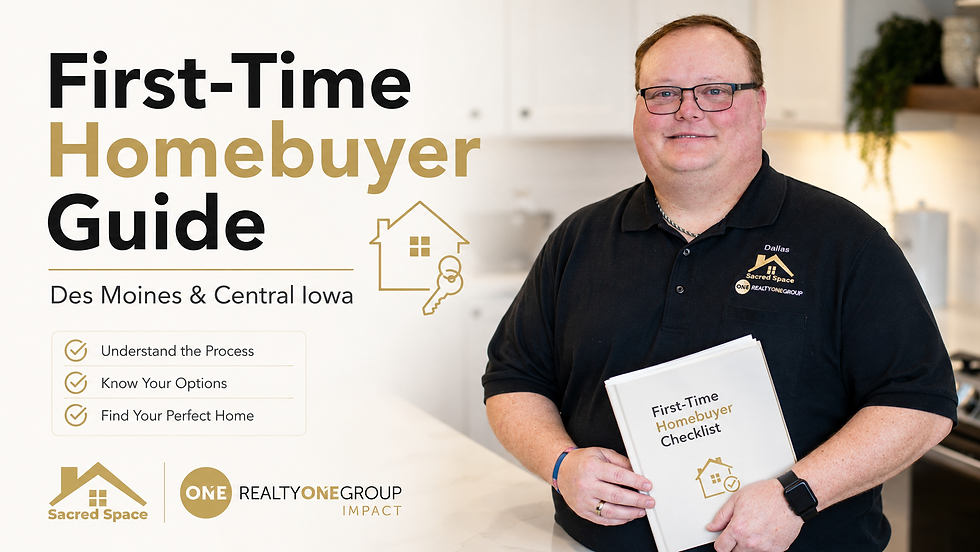
Buying your first home in Des Moines or Central Iowa is an exciting journey, but it can also feel overwhelming if you’re not sure where to begin or what to expect. I’m Dallas L. Wood, a REALTOR® with more than 20 years of structural drafting experience, and I’m here to walk you through the entire process. From getting your finances in order to the final handshake at closing, I’ll share practical advice and clear explanations to help you feel confident every step of the way.
“Homebuying Process at a Glance”
Where to Start Before Looking at Homes
Before you dive into browsing listings or attending open houses, it’s important to lay a solid foundation. Start by thinking about your needs and goals. Ask yourself:
What kind of home fits your lifestyle? (Single-family, condo, townhouse?)
Which neighborhoods in Des Moines or Central Iowa appeal to you?
How long do you plan to stay in this home?
What features are must-haves versus nice-to-haves?
Taking time to answer these questions helps narrow your search and keeps you focused.
Next, check your credit score and review your finances. Your credit score affects the mortgage rates you’ll qualify for, so knowing where you stand is key. Also, gather documents like pay stubs, tax returns, and bank statements. These will be needed later for mortgage pre-approval.
Getting Pre-Approved and Understanding a Realistic Budget
Getting pre-approved for a mortgage is one of the most important early steps. Pre-approval means a lender has reviewed your financial information and conditionally agreed to loan you a certain amount. This gives you a clear idea of your budget and shows sellers you’re a serious buyer.
When you get pre-approved, the lender looks at your income, debts, credit score, and savings. They’ll tell you the maximum loan amount you qualify for, but that doesn’t mean you should spend up to that limit. Consider your monthly expenses and what you feel comfortable paying.
A realistic budget includes more than just the mortgage payment. Factor in property taxes, homeowners insurance, utilities, maintenance, and any HOA fees. I always recommend buyers leave some wiggle room for unexpected costs.
How Much Money You May Need Upfront
Many first-time buyers are surprised by the upfront costs beyond the home price. Here’s a breakdown of what you might need:
Down payment: This is a percentage of the home price you pay upfront. It can range from 3% to 20% or more, depending on your loan type. For example, a 5% down payment on a $200,000 home is $10,000.
Earnest money: This is a good-faith deposit made as part of your offer. The amount is negotiated as part of the purchase agreement. For many of my first-time buyers, I may suggest around $1,000 depending on the property and situation. If the transaction closes, it is generally credited toward the buyer’s funds due at closing.
Home inspection: Expect to pay around $300 to $500 for a professional inspection. Inspection costs vary depending on the property and the services ordered. Your inspector can give you the exact price before the inspection. This is crucial to uncover any hidden issues.
Closing costs: These can include lender fees, appraisal costs, recording-related expenses, and other transaction costs. Your lender will provide estimates based on your particular loan and purchase.
Prepaids: These are upfront payments for property taxes, homeowners insurance, and mortgage interest that may be due at closing.
Cash cushion: It’s wise to keep some savings after closing for repairs, moving expenses, and emergencies.
Knowing these costs upfront helps you avoid surprises and plan your finances better.
Choosing a REALTOR®
Finding the right REALTOR® can make a big difference in your homebuying experience. You want someone who listens, understands your needs, and knows the Des Moines and Central Iowa market well.
With my background in structural drafting, I bring an extra layer of insight when touring homes. I can help you spot potential issues like foundation movement, wall cracks, uneven floors, or windows and doors that don’t operate properly. These signs might indicate bigger problems down the road. Of course, this doesn’t replace a professional home inspection, but it helps you make informed decisions.
Look for a REALTOR® who communicates clearly, is patient, and guides you through each step without pressure.
Beginning the Home Search
Once you have your budget and REALTOR® in place, it’s time to start looking at homes. I recommend starting with online listings to get a feel for what’s available in Des Moines and Central Iowa within your price range.
Make a list of homes you want to see in person. When touring, take notes and photos to help you remember details later. Don’t rush—visit multiple properties to compare.

Touring homes in Des Moines helps you understand what fits your needs and budget.
What to Look for When Touring a Home
When you walk through a home, pay attention to both the big picture and small details:
Structure: Look for cracks in walls or ceilings, uneven floors, or doors and windows that stick or don’t close properly. These could be signs of foundation issues or settling.
Roof and gutters: Check for missing shingles, sagging, or signs of leaks.
Plumbing: Turn on faucets and flush toilets to check water pressure and drainage.
Electrical: Test light switches and outlets.
Heating and cooling: Ask about the age and condition of the furnace and AC.
Storage and layout: Consider if the space meets your needs for closets, kitchen, and living areas.
Remember, I can help you spot some of these issues thanks to my drafting experience, but a licensed home inspector will provide a thorough evaluation later.
Making an Offer
When you find a home you want, your REALTOR® will help you prepare an offer. This includes the price you’re willing to pay and any conditions, like a home inspection or financing approval.
In Des Moines and Central Iowa, the market can vary, so your offer strategy depends on current conditions. Sometimes you can negotiate, other times you may need to act quickly.
Your earnest money deposit accompanies the offer to show you’re serious. If the seller accepts, the home goes “under contract,” and the next steps begin.
Home Inspections
After your offer is accepted, schedule a professional home inspection. This is your chance to uncover any hidden problems before closing.
A home inspector will check the structure, roof, plumbing, electrical, HVAC, and more. If issues arise, you can negotiate repairs or credits with the seller.
Don’t skip this step. Even if a home looks perfect, inspections often reveal things you wouldn’t notice on your own.
Appraisal and Financing
Your lender will order an appraisal. An appraisal is an independent opinion of the property's value; the lender uses valuation information as part of underwriting. If the appraisal comes in low, you may need to renegotiate or bring more cash to closing.
Meanwhile, your lender processes your mortgage application, verifying your income, credit, and other details. Stay in touch with your loan officer and provide any requested documents promptly.

Appraisals help ensure the home’s value supports your loan amount.
What Happens Between an Accepted Offer and Closing
This period involves several important steps:
Finalizing your mortgage approval
Completing the home inspection and negotiating repairs if needed
Ordering the appraisal
Title search to confirm the property’s ownership is clear. Iowa has Iowa Title Guaranty and an attorney/abstract-based title system rather than the conventional title-insurance model used in most states
Scheduling the closing date
Your REALTOR® and lender will guide you through these tasks. Stay organized and responsive to keep things moving smoothly.
The Final Walkthrough
A day or two before closing, you’ll do a final walkthrough of the home. This is your chance to confirm the property is in the agreed-upon condition and any repairs were made.
Check that appliances work, no new damage occurred, and the home is clean and empty. If you find issues, notify your REALTOR® immediately.
What to Expect on Closing Day
Closing day is when ownership officially transfers. You’ll sign the final documents with the professionals handling your closing.
You’ll sign a stack of documents, pay your down payment and closing costs, and receive the keys to your new home.
Bring a valid ID and allow enough time to carefully review and sign your closing documents. After the closing requirements are completed and the appropriate documents are recorded, ownership is transferred and you receive the keys according to the terms of the transaction.
Common Mistakes First-Time Buyers Should Avoid
Skipping pre-approval: Without it, you won’t know your budget or be taken seriously by sellers.
Ignoring additional costs: Down payment is just one part. Don’t forget closing costs, inspections, and moving expenses.
Overlooking home condition: Don’t rely only on looks. Use inspections and my drafting experience to spot potential issues.
Rushing decisions: Take your time to find the right home. Don’t feel pressured to buy just because you’re approved.
Not asking questions: If you don’t understand something, ask your REALTOR® or lender. It’s your biggest investment.

Clear communication helps avoid mistakes and surprises during homebuying.
FAQ for First-Time Homebuyers in Des Moines & Central Iowa
How much should I save for a down payment?
It depends on your loan type. Many first-time buyers put down 3% to 5%, but some loans allow zero down. Keep in mind you’ll also need money for closing costs and other fees.
What is earnest money and is it refundable?
Earnest money is a good-faith deposit made as part of your offer. Whether it is returned depends on the terms of your purchase agreement and the reason the transaction does not close. For example, an inspection or financing provision may give a buyer certain rights if its requirements are met. Because every situation is different, I always review the specific contract terms with my buyers.
Can I buy a home without a REALTOR®?
Yes, but having a REALTOR® can help you understand the process, evaluate options, negotiate, and coordinate the transaction. Remember, the REALTOR® is working for YOU and has your best interest at heart.
What if the home inspection finds problems?
You can ask the seller to fix issues, offer a credit, or in some cases, walk away if the contract allows.
How long does the homebuying process take?
From pre-approval to closing, it usually takes 30 to 60 days, but this can vary.
If you’re thinking about buying your first home in Des Moines or Central Iowa, I’m here to help you navigate the process with clear, straightforward guidance. Feel free to reach out anytime to get started or ask questions.
Dallas L. Wood, REALTOR®
Serving Des Moines and Central Iowa
Contact Dallas Wood for honest advice and support on your homebuying journey.
Comments